Professional septic tank installation and planning in Waynesboro, GA
Septic Tank Installation in Waynesboro, GA
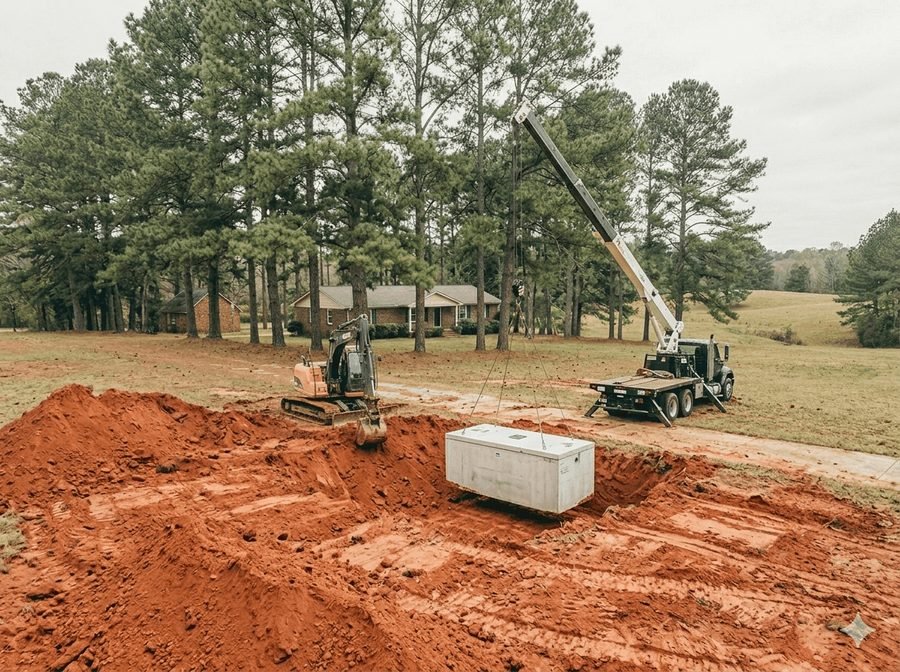
When a septic system reaches end of life, when the drain field has failed beyond repair, or when a property is being developed without an existing system, professional septic tank installation is the next step. In Burke County, where soil conditions, lot size, and local permitting requirements all shape what system is appropriate, planning your septic tank installation well from the start makes a significant difference in long-term outcome and cost. Our team provides expert septic tank installation for rural and residential properties.
What Is Required to Install a Septic System in Burke County, Georgia?
Septic system installation in Burke County requires a Georgia EPD permit, a completed soil evaluation and perc test, and approval from the local environmental health office. The soil evaluation determines whether the site can support a conventional system or requires an alternative design due to the dense red clay soils common in upland areas around Waynesboro. Burke County's approximately 830 square miles includes varied terrain where some properties pass perc tests easily while others require alternative systems.
How Much Does a New Septic System Cost in Waynesboro and Burke County?
New septic system cost in the Waynesboro area typically ranges from $8,000 to $20,000 or more depending on system type, lot conditions, and soil test results. Conventional gravity-fed systems on suitable soil are at the lower end, while alternative systems like mound or drip irrigation required for difficult lots in Burke County's clay soils cost significantly more. A site evaluation with perc testing provides the information needed for an accurate estimate.
What professional septic tank installation actually involves in Burke County
Professional septic tank installation is not a simple operation. Georgia requires a septic permit, a perc test, and a site-specific design and layout before any work begins. Understanding what your property needs — and what professional septic tank installation options are available — is the first step.
When septic tank installation is needed
- Drain field failed — warrants new septic tank installation
- Tank damage requires septic tank installation
- System age warrants septic tank installation replacement
- New development needs septic tank installation
- Repeated repairs point toward septic tank installation
Septic tank installation permit
Septic tank installation in Georgia requires a septic permit through the local county environmental health office. The professional septic tank installation process involves a site evaluation and a perc test to determine the appropriate system type. Understanding the septic permit timeline upfront prevents delays during your septic tank installation.
System types used in Burke County
- Conventional gravity systems — most common on lots with suitable soil drainage
- Mound systems — used when soil depth is limited or drainage is poor
- Drip irrigation systems — for difficult lots with limited space or poor soil
- Aerobic treatment units (ATU) — higher-treatment option for sensitive sites
Professional septic tank installation cost
Professional septic tank installation cost in Waynesboro depends on system type, tank size, and a perc test. Conventional septic tank installation on suitable soil is typically the most affordable. Alternative septic tank installation for difficult lots costs more due to equipment and installation complexity.
Starting the planning conversation before committing to a system
One of the most common mistakes in replacement planning is assuming a system type before anyone has evaluated the lot. A property with heavy clay soil, a high water table, or limited lot space may not be able to support a conventional gravity system — regardless of what the previous system was.
Good planning starts with a realistic assessment of what your specific property can support, what the permitting process requires, and what the full cost range looks like before any contracts are signed. That conversation is free and is the most valuable step in the process.
Start the Planning ConversationHow replacement planning works from your first message
Installation and replacement planning takes longer than routine service decisions because it involves site evaluation, permitting, and design before any work begins. Starting the conversation early gives you time to understand your options before a failing system forces a rushed decision.
Describe your property and situation
Use the form to explain your current system status, lot size, soil type if known, and why you are considering replacement or new installation. Include any prior soil test results if available.
Get a planning overview
We respond with what the evaluation process involves, what system options are likely appropriate for your property, and a realistic cost range so you can plan before any permit applications are filed.
Move through permitting and installation
Once you have a clear picture, we guide you through the permitting process, soil testing, system selection, and installation scheduling so the project moves forward with as few surprises as possible.
Septic tank installation questions Burke County property owners ask most
These cover new septic system cost, permitting, system types, and the replacement decision for Waynesboro and Burke County properties.
How much does a new septic tank installation cost in Waynesboro GA?
Septic tank replacement cost in Waynesboro typically ranges from $8,000 to $20,000 or more depending on system type, lot conditions, and perc test results. Conventional septic tank installation on suitable soil is generally less expensive. Alternative systems for difficult lots — mound systems, drip systems, or aerobic units — cost more. A site evaluation is needed for an accurate septic tank installation estimate.
Do I need a permit for septic tank installation in Burke County GA?
Yes. All septic tank installation in Georgia requires a septic permit through the county environmental health office. The process includes a perc test to determine the appropriate system type and field location. Work done without a septic permit is illegal and can create serious problems when selling the property.
When does a septic system need to be replaced?
A septic system typically needs replacement when the drain field has fully failed and cannot be repaired, when the tank has significant structural damage, when the system has reached end of life (often 25 to 40 years), or when household size or usage has significantly exceeded the system's original design capacity and repeated repairs are no longer cost-effective.
What types of professional septic tank installation are used in Burke County GA?
Conventional gravity-fed septic systems are most common when soil conditions allow. Properties with heavy clay may require alternative options such as mound systems or drip systems. The appropriate system is determined by a perc test and site evaluation.
How long does septic tank installation take?
The project timeline depends on the septic permit process, perc test scheduling, and site conditions. From initial planning to completion, the process typically takes several weeks.
Can I complete a septic tank installation without replacing the tank?
Sometimes. If the existing tank is in good structural condition, it may be possible to perform a partial installation. A professional evaluation determines whether keeping the existing tank is viable under current code.
How long does a perc test take?
The on-site percolation test itself typically takes 2 to 4 hours. Scheduling with the Burke County environmental health office can add days or weeks depending on availability. The perc test determines how quickly water moves through the soil — a key factor in deciding whether your property can support a conventional gravity septic system or requires an alternative design. Burke County's red clay soils, common throughout the Waynesboro area, can slow drainage significantly and may require a mound or alternative system if percolation rates are insufficient.
Do all counties in Georgia require a perc test?
Georgia requires a soil evaluation as part of the septic permitting process statewide. In Burke County, this process is administered through the county environmental health office in coordination with state regulations under the Georgia EPD Division of Water Resources. Georgia septic system regulations set minimum setback requirements — including Georgia septic setback requirements from wells, property lines, and structures — that must be met before a permit is issued. A licensed soil evaluator completes the soil test, and the results determine whether a conventional system is approved or whether an alternative system design is required.
Start your replacement planning conversation
Fill out the quote form on our homepage. Describe your current system situation, lot size, and what is prompting the replacement discussion. Include any soil test results or permitting history if you have them.
Request a Free QuoteService area & related services
Waynesboro Septic helps property owners throughout Waynesboro and Burke County plan and execute septic system replacement and new installation projects.
- Primary city: Waynesboro, GA 30830
- County: Burke County residential & rural
- Response: Planning requests reviewed and responded to promptly
Related services
- Septic inspections — confirms system failure before replacement
- Drain field evaluation — determines if field can be repaired or needs replacement
- Septic repair — if repair is viable before committing to replacement
- Septic tank pumping — often needed as part of system evaluation
Prefer email? Email us directly.
Burke County, GA official resources — environmental health office contacts, permits, and county government information for Burke County septic permitting.