Septic maintenance habits that prevent expensive problems in Burke County
Septic maintenance & septic tank maintenance in Waynesboro, GA
Most septic system failures are preventable. The systems that last 30 years are not dramatically different from the ones that fail in 10 — the difference is usually a combination of regular septic maintenance, controlled water use, and careful flushing habits. For homeowners in Waynesboro and Burke County, understanding what your system actually needs is the cheapest form of septic maintenance there is.
How Often Should You Schedule Septic Maintenance in Burke County?
Most residential septic tanks in the Waynesboro area need pumping every 3 to 5 years as part of routine septic maintenance. Properties with smaller tanks, larger households, or garbage disposals may need more frequent service. Burke County's clay-heavy soils make neglected maintenance particularly costly here, as saturated drain fields in dense red clay are difficult to restore once they fail.
What Septic Maintenance Steps Protect Your System in Waynesboro?
Effective septic maintenance in Burke County includes regular tank pumping before solids accumulate, careful management of what goes into the system (no wipes, grease, or harsh chemicals), water use moderation to avoid hydraulic overload, and protecting the drain field area from vehicle traffic and root intrusion. The cost of adherence to a septic maintenance schedule is minor compared to the $15,000 to $30,000 required for drain field replacement.
The four septic maintenance habits that determine how long a septic system lasts
Septic system maintenance does not fail randomly. In almost every case, failure traces back to at least one of four things: tank pumping was neglected too long, the wrong materials went into the system, water use exceeded the system's capacity, or the drain field was physically damaged. Addressing all four keeps most systems running for decades.
1. Pump on a septic maintenance schedule
Waiting until something goes wrong before pumping is the most common and most expensive septic maintenance mistake. By the time slow drains or odors appear, the tank may already be pushing solids toward the field. Septic tank maintenance every 3 to 5 years keeps solids from ever reaching that point.
2. Septic tank maintenance: Control what enters the system
- Never flush wipes, paper towels, or feminine products
- Avoid pouring grease, cooking oils, or fats down any drain
- Do not use chemical drain cleaners — they kill the beneficial bacteria
- Minimize garbage disposal use — ground food adds significantly to solids
- Keep medications and harsh chemicals out of any drain
3. Septic system maintenance: Manage daily water use
Every gallon of water that enters your home eventually reaches the septic system. Overloading the system with too much water in too short a time pushes incompletely treated water into the field before the tank can do its job. Spreading laundry loads across multiple days, fixing leaky faucets and running toilets promptly, and using water-efficient fixtures all help keep the system within its capacity.
4. Septic system maintenance: Protect the drain field
- Never drive vehicles or park equipment over field lines
- Do not plant trees within 30 feet of the field — roots intrude
- Direct roof drains and surface water away from the field area
- Do not build structures or place heavy loads over the field
- Keep a record of where the field lines are located
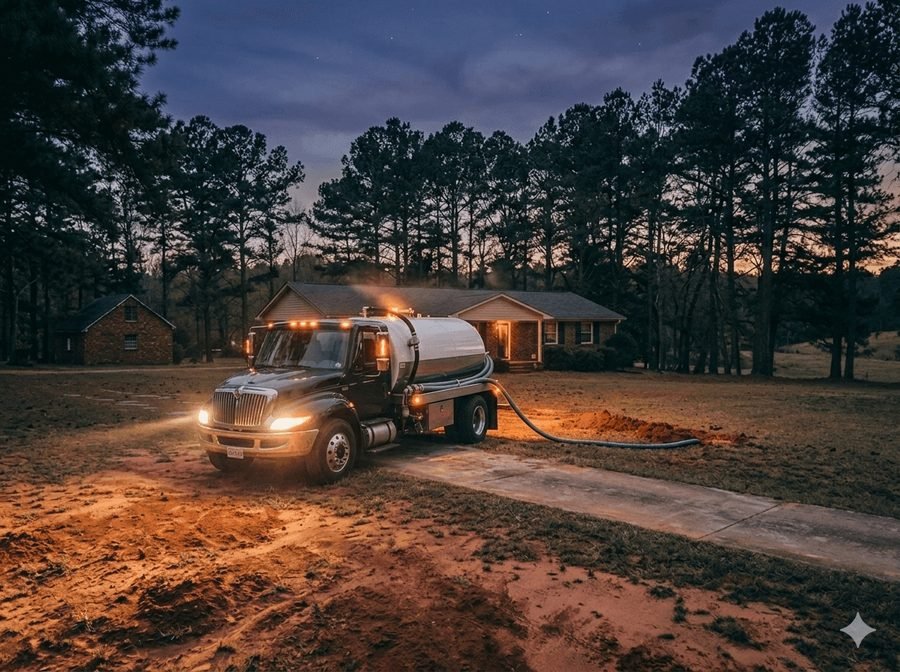
The cheapest septic maintenance call is the one you avoid
Routine septic tank maintenance costs a fraction of what a drain field repair or replacement costs. The math is not complicated — consistent septic maintenance is almost always the most cost-effective approach over the life of a system.
For property owners in Burke County who have been on a system for years without service, starting fresh is easy: schedule a septic maintenance visit, get a current assessment of the system's condition, and set up a septic maintenance schedule going forward. That single visit gives you a clear picture of where things stand and what to expect in the near term.
Schedule a Septic Maintenance VisitStarting or restarting a maintenance routine for your Burke County property
Whether you have maintained your system consistently or cannot remember the last time it was serviced, the starting point is the same: get the current condition assessed so you know what the system actually needs.
Request a pumping and condition check
Use the form to schedule a pumping visit. If you do not know the last service date or the tank size, include your best estimate of household size and property age so we can help estimate what the system likely needs.
Get a current condition report
During the pumping visit, the technician checks the tank's current condition — baffle status, lid condition, water level, and whether anything looks like it needs attention before the next scheduled visit.
Set up a maintenance schedule
Based on tank size and household usage, we recommend a pumping interval. That gives you a clear timeline for the next service visit and keeps the system from falling back into the "I forgot about it" cycle that causes most preventable failures.
Septic maintenance & septic tank maintenance FAQ for Burke County
These cover the most common septic maintenance questions from property owners in Burke County who want to understand what their septic system actually needs.
How do I perform septic maintenance?
The core of septic maintenance is four things: pump on a septic maintenance schedule, control what enters the system, manage water use to avoid overloading the field, and protect the drain field from physical damage. Most septic system maintenance problems trace back to at least one of these four areas rather than random mechanical failure.
What should not be flushed or put in a septic system?
Never flush wipes (even those labeled flushable), paper towels, feminine hygiene products, grease or cooking oils, medications, bleach, or chemical drain cleaners. These materials either do not break down properly in the tank or they kill the beneficial bacteria the system depends on to treat waste. The result is accelerated solid buildup and field line damage.
How often is septic maintenance needed?
Most household septic tanks need septic maintenance pumping every 3 to 5 years. The right septic maintenance interval depends on tank size, number of occupants, and daily water use. If you do not know the last service date, scheduling a pumping visit and inspection resets the baseline and lets you plan from current conditions rather than guessing.
Do septic additives help with septic maintenance?
Most septic additives are unnecessary and some are harmful for septic system maintenance. A healthy septic tank develops its own bacterial ecosystem through normal household use. Chemical additives can disrupt this balance. Biological additives have limited evidence of real benefit. Regular pumping, careful flushing habits, and controlled water use are far more effective than any additive on the market.
How much is septic tank maintenance cost in Waynesboro GA?
Typical septic tank maintenance cost in Waynesboro depends on whether you are just doing a routine inspection or combining it with a full pumping visit. Routine pumping costs are significantly lower than emergency repairs, making consistent septic maintenance the most affordable long-term strategy for Burke County homeowners.
How much water is too much for septic system maintenance?
A typical septic system is designed around daily water use estimates for its size and household occupancy. Problems arise when large amounts of water are sent through in short bursts — multiple loads of laundry in one day, a running toilet going unrepaired for weeks, or a dishwasher running every cycle at once. Spreading use across the day and fixing leaks promptly keeps water flow within the system's design capacity.
What trees are safe to plant near a septic system?
Trees with aggressive root systems should not be planted within 30 feet of septic tank lids, field lines, or the distribution box. Willows, poplars, silver maples, and elm trees are particularly problematic. Shallow-rooted plants like ornamental grasses or small flowers are safer near the field area. When in doubt, keep trees further away from any component than you think you need to.
How often should you service your septic system?
Septic tanks in Burke County, Georgia should be pumped every 3 to 5 years under normal household use for proper septic maintenance, though properties with higher occupancy, garbage disposals, or older concrete tanks may need service every 2 to 3 years. Beyond pumping, a septic system maintenance inspection every 3 to 5 years — ideally at the same time as pumping — helps catch baffle deterioration, tank condition issues, and early drain field stress before they become expensive repairs. If you do not know your last service date, scheduling a pumping and condition check resets the baseline.
Do you need to service a septic tank?
Yes. A septic tank is not a passive underground container — it requires regular septic maintenance service to function safely. Without periodic pumping, solids accumulate until they reach the drain field, causing field failure that costs far more to repair than the septic maintenance visits that would have prevented it. Routine septic maintenance — pumping, inspection, and condition monitoring — is the only way to extend the life of the system and avoid emergency failures. Georgia property owners on private septic systems have no municipal backup: if the system fails, the repair cost falls entirely on the property owner.
Schedule a maintenance visit or get a quote
Fill out the quote form on our homepage. Include household size, approximate tank size if known, last service date, and whether you have any current symptoms or concerns.
Request a Free QuoteService area & related services
Waynesboro Septic helps homeowners throughout Waynesboro and Burke County establish and maintain a practical septic maintenance routine.
- Primary city: Waynesboro, GA 30830
- County: Burke County residential & rural
- Response: Quote requests reviewed and responded to promptly
Related services
- Septic tank pumping — the core of any maintenance schedule
- Septic inspections — for a full system condition baseline
- Septic repair — when maintenance reveals a fixable issue
- Drain field troubleshooting — if field symptoms appear
Prefer email? Email us directly.
City of Waynesboro, GA — official city information, utilities, and local resources for Waynesboro residents.